



Why Waiting Is One of the Best Things You Can Do for Your Lawn
Every spring, there’s a familiar rush. The temperatures warm, the grass begins to green, and suddenly the hum of lawn mowers returns to the neighborhood. It feels productive, responsive, and seasonal.
But what if the most regenerative thing you could do this month is wait?
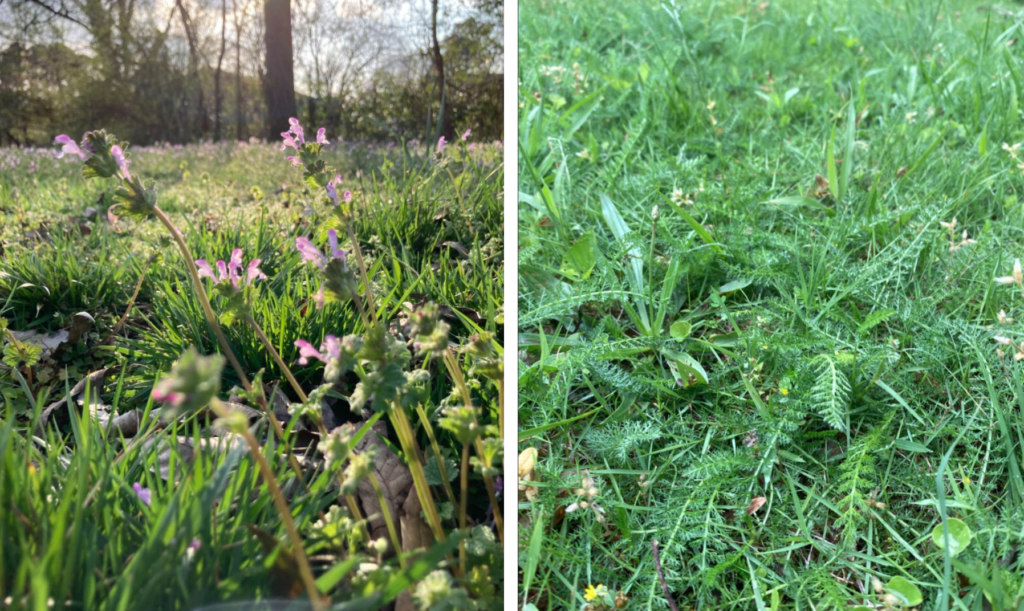
No Mow March is a simple idea with powerful impact: delay mowing early in the season to support pollinators, strengthen plant roots, and protect soil life. At Shades of Green Permaculture, we encourage homeowners to see lawns not as flat green carpets, but as living ecosystems. And ecosystems benefit from patience.
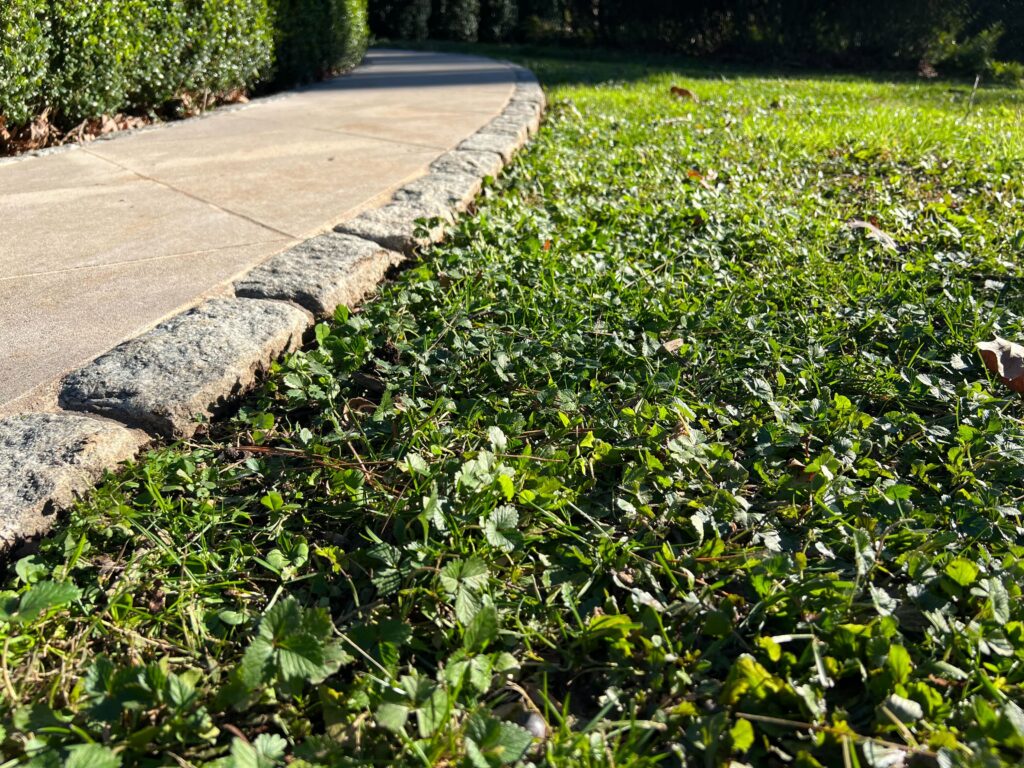
When you hold off on mowing in early spring, you give early-emerging pollinators something incredibly valuable: food. Many native bees and beneficial insects come out of dormancy before trees and shrubs begin blooming. The small flowering plants often labeled as “weeds” — clover, violet, dandelion — are some of the first nectar and pollen sources available. Mowing too soon removes those resources during a critical window. Waiting even a couple of weeks can create a meaningful difference in supporting biodiversity.
There’s also a quieter transformation happening underground. Grass and groundcovers are waking up from winter dormancy and directing energy toward rebuilding their root systems. When lawns are cut too short or too early, plants must shift energy into regrowing leaves instead of deepening roots. Allowing that early-season growth encourages stronger root development, which translates to greater drought tolerance, better nutrient uptake, and improved resilience during summer heat. In many ways, waiting now sets your lawn up for success later.
The soil itself benefits from this pause. Taller grass helps moderate soil temperature and retain moisture, creating stable conditions for microbes, fungi, and beneficial insects that are also reactivating in spring. A healthy soil ecosystem is the foundation of any thriving landscape. By resisting the urge to tidy up too soon, you protect that foundation.
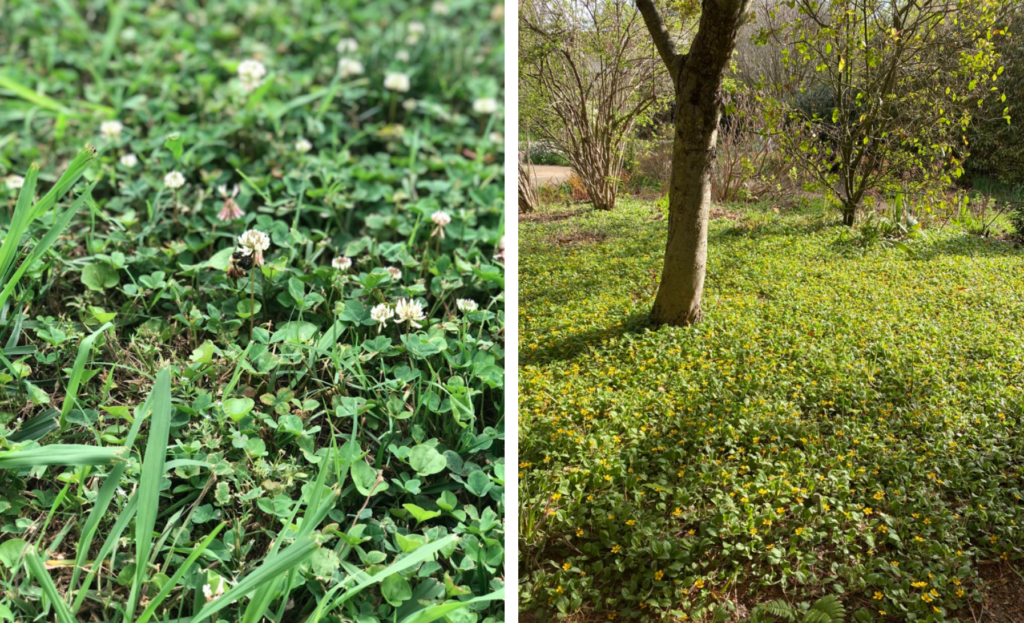
Of course, not all lawns respond the same way to being left unmowed. Traditional monoculture turf — designed for uniformity and tight maintenance schedules — can struggle when management shifts. That’s where Ecolawns can enter the chat.
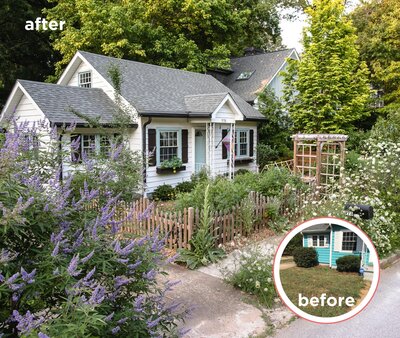
Our answer to organic lawncare in Atlanta, designs and establishes ecolawns, which are intentionally cultivated polycultures—diverse mixes of grasses and flowering groundcovers such as clover, violets, blue-eyed grass, yarrow, and self-heal. These “living tapestries” are Chemical-free – No synthetic fertilizers, pesticides, or pre-emergent herbicides, Pollinator-supporting – Providing nectar and habitat for bees, butterflies, and beneficial insects, Water-wise – Improving soil structure to increase moisture retention and reduce runoff, Resilient – Better equipped to handle foot traffic, drought, and climate variability, and Quiet & Low-Emission – Maintained using solar-powered electric equipment
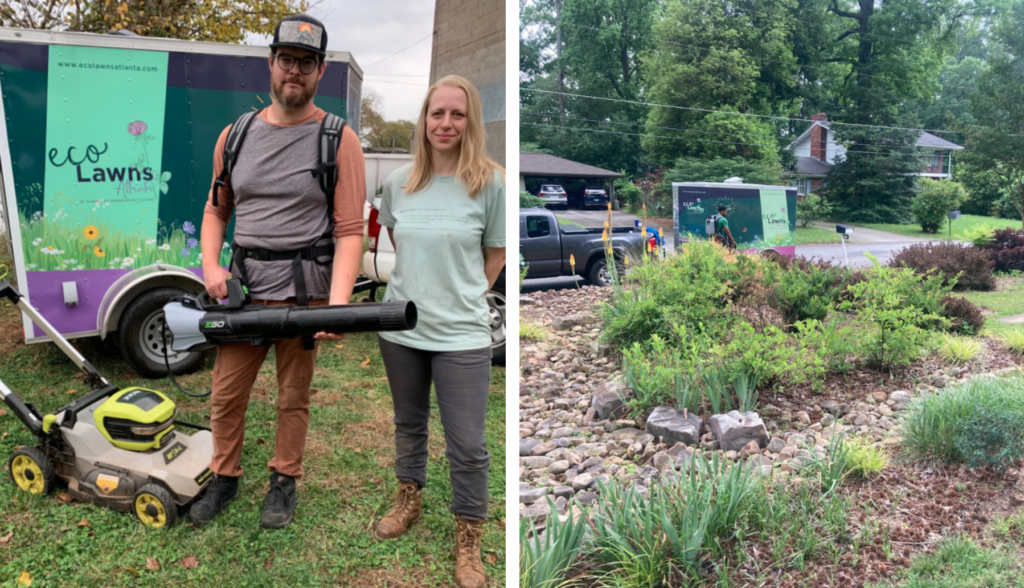
By avoiding conventional lawn chemicals and embracing plant diversity, ecolawns help rebuild soil biology, capture carbon, reduce irrigation needs, and create year-round ecological value.
In this context, No Mow March becomes less of a seasonal campaign and more of a natural extension of how your lawn functions. Polyculture lawns — landscapes made up of many cooperating species — are inherently more stable and adaptable than monocultures. They don’t require strict weekly mowing schedules to look healthy. Instead, management becomes observational and responsive. You mow higher, often around three to four inches. You leave clippings to feed the soil. You allow short flowering windows. You guide the system rather than forcing it.
The result is not neglect. It’s intentional ecology.
There’s a different kind of beauty in a lawn that hums with life. A softness. A few scattered blooms. The quiet buzz of early bees doing essential work. When we step back, even briefly, we begin to see lawns not as status symbols but as habitat.

No Mow March invites us to redefine what “well-kept” means. Not perfectly uniform, but deeply rooted. Not sterile, but resilient. And when we design with ecolawns and polycultures in mind, we create landscapes that manage themselves more gracefully — landscapes that thrive because we chose partnership over control.
This spring, consider giving your mower a little more rest. The life above and below your soil will notice.