



I’m excited to have our friend Ben Portwood of Asheville Drainage, Inc. (www.ashevilledrainage.com), a stormwater and drainage contractor serving Western North Carolina. Together, we are working to bring rainwater harvesting, infiltration, and green infrastructure to more properties across the region.
Thanks for guest starring Ben!
Here in Asheville, we’ve been in a drought for the better part of a year. You’d think that would mean drainage issues are off the table for a while. But anyone who’s dealt with a wet basement or a soggy yard knows better — the next big rain event is always coming, and when it does, the problems will come right back. Hurricane Helene reminded so many of us of this in the harshest way possible.
What most people don’t realize is that drainage problems and water scarcity are two sides of the same coin. The water that’s flooding your basement in March is the same water you wish you had in August. The trick is learning to manage it as a resource rather than fighting it as a nuisance.
Rethinking What Drainage Means
The conventional approach to drainage is simple: get the water away from the house as fast as possible. French drains, downspout drains, and pipes to the curb. It works on an individual scale to dry out that one house, but it treats water as waste, and it ignores where that water actually goes — straight into streets, storm drains, creeks, and ultimately the French Broad.
There’s another way. By intercepting rainwater and stormwater high on a property and slowing it down through swales, rain gardens, and infiltration basins, you can solve drainage problems passively while building soil, supporting plants, and recharging groundwater. The water becomes an asset for the landscape and the city instead of a liability.

A Cistern That Doubled as Drainage
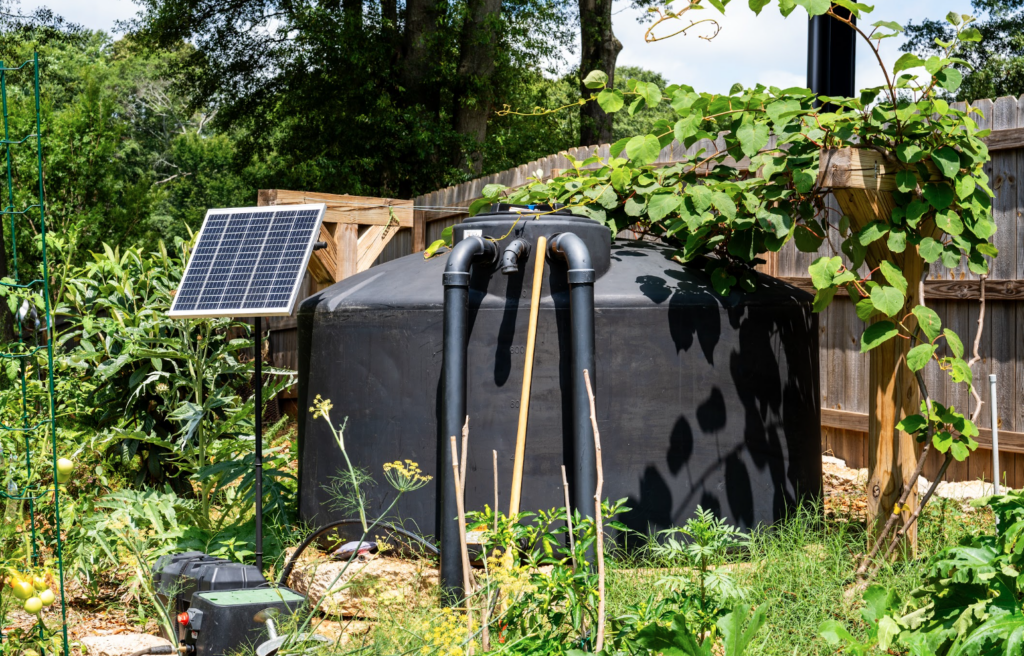
One of the first times we installed a rainwater harvesting cistern back in 2010, we weren’t even thinking about drainage. The client wanted to capture rainwater from the downspouts for irrigation. Simple enough. But a few months later, they mentioned something interesting: the sump pump in their basement, which used to run constantly after rains, hadn’t kicked on once since we’d done the work.
We hadn’t touched the drainage system, or installed a single foot of pipe to redirect water. All we’d done was manage water coming off the roof before it could saturate the soil around the foundation. That was enough to solve a basement water issue they’d been dealing with for years.
A Tale of Two Proposals
Around the same time, we bid on a project where the homeowner had a serious drainage issue — her yard sat in a bowl, lower than the curbs on every side. Water had nowhere to go. She interviewed two contractors for the project, and the other contractor’s proposal was to run a network of French drains into a dry well that sat right next to the house, then install a sump pump to push the water out to the street.
We broke down that logic for her. The plan was to concentrate all the stormwater right next to her foundation—the place she least wanted it—and then rely on an electric pump to evacuate it. What happens during a thunderstorm when the power goes out? It was a disaster waiting to happen.
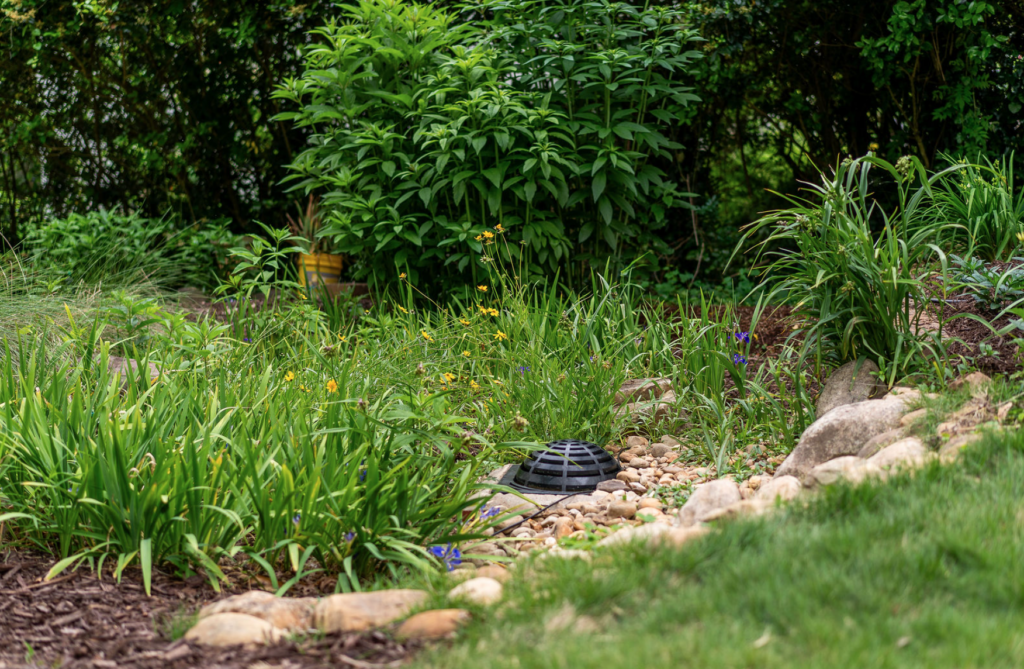
Our proposal was different. We installed rain gardens and subtle grading swales along the top of the property, intercepting water as it entered her property from uphill neighbors before it could reach the bottom of the bowl. We kept the height and routed it around the house, under the driveway, and into a series of rain basins. Eventually, using the natural grade, we got the water high enough to flow over the curb on its own. Our basins captured around 3” of rain before filling up and sending water to the street. This meant 95% of the water that falls throughout the year is kept onsite and NOT sent to the street. There were no pumps and no electricity — it was just gravity, water and soil doing what they do.
She never had flooding again. And a couple of years later, her downhill neighbor came over and mentioned that her own drainage problems had disappeared too — a benefit we hadn’t planned for, but which made sense once we thought about it. By managing water at the top of the watershed, we’d taken pressure off everything downhill.
The Macro Benefits of Microscale Infiltration
When enough properties manage their own water this way — even small properties — the effects compound. Flash flooding downstream is reduced. Stormwater infrastructure isn’t overwhelmed during big events, which matters a lot in a city like Asheville where the system is already stressed and the French Broad watershed carries everything we send it. Groundwater gets recharged, which helps vegetation survive and thrive during droughts. Pollinators get habitat. Native plants thrive. Municipal utilities are under less pressure.
There’s also growing evidence that keeping water in the landscape — instead of flushing it to the ocean — plays a real role in climate resilience, and may even cool things down at the local scale. Every rain garden, every swale, every infiltration basin is a small contribution to a healthier hydrology. And that’s the kind of resilience we need built into every property in Western North Carolina.

The Bonus Layer: Food
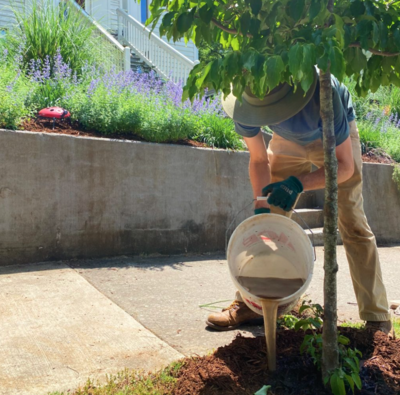
Here’s where it gets really interesting. The plants you put in a rain garden or along a swale don’t have to be ornamental. They can be productive. Fruit trees, nut trees, berry bushes, perennial herbs, perennial vegetables — all of these thrive in the kind of moist, well-drained conditions that infiltration features create.
We’re not suggesting you’ll feed your family entirely from your yard. But a few chestnut trees can produce a meaningful harvest. Blueberries and raspberries next to a rain garden mean fresh fruit in summer. Herbs near the kitchen door mean you’re walking outside to top off a salad instead of buying a plastic clamshell at the store. Harvesting becomes something you do with your kids on a Saturday. It’s food, it’s connection to your land, and it’s essentially free once the systems are in.

The Takeaway
Drainage doesn’t have to be a battle against water. With the right design, it becomes an opportunity to build a landscape that handles storms gracefully, weathers droughts better, supports pollinators and wildlife, takes pressure off public infrastructure, and even feeds your family. That’s not just drainage. That’s a productive landscape.
– Ben Portwood