

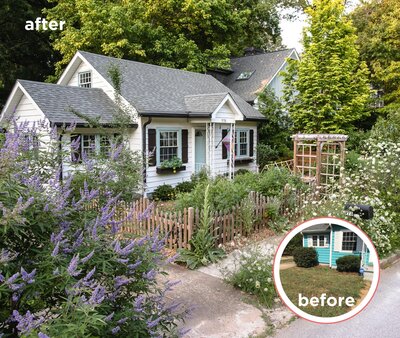


Shades of Green has a slightly different relationship with weeds. We don’t automatically pull them. In fact, one of the first things we teach people when they start working with their landscape is to slow down and observe before doing anything and that includes weeds. The word “weed” doesn’t actually tell us much about a plant. It simply tells us that a plant is growing somewhere we didn’t intend for it to grow. And sometimes, that plant is doing exactly what the ecosystem needs.
Maybe it’s covering bare soil. Maybe it’s feeding a pollinator. Maybe it’s helping break up compacted soil. Maybe it’s providing food for a caterpillar or bird. Or maybe it’s simply filling a space while the rest of the garden gets established.
This doesn’t mean we never weed because there are plenty of plants we remove, especially invasive species or plants that are crowding out something we intentionally planted, but before we pull something, we like to ask a few questions:
What is this plant doing here?
Who is using it?
What is it telling me about this site?
And does it actually need to go?
Here are a few of the plants we’re often happy to leave behind:
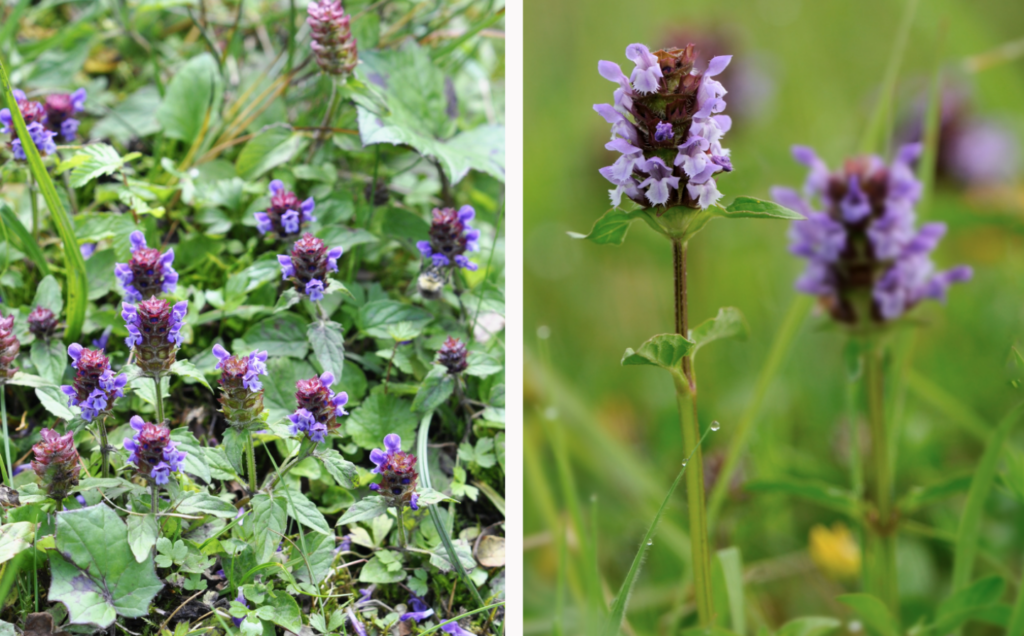
1. Self-Heal (Prunella vulgaris)
Self-heal is one of those plants that can quietly sneak into a lawn or garden without asking for much attention.
It’s a low-growing perennial with small purple flowers that are visited by bees and other pollinators and it can tolerate mowing, foot traffic, and a range of growing conditions, making it a particularly useful little groundcover.
We especially appreciate plants like self-heal because they challenge the idea that a lawn needs to be made up of one species. Why not let a diversity of low-growing plants share the space? Polyculture lawns are in, have you heard?
Why we leave it: It provides nectar for pollinators, creates living groundcover, and adds diversity to lawns and garden spaces.
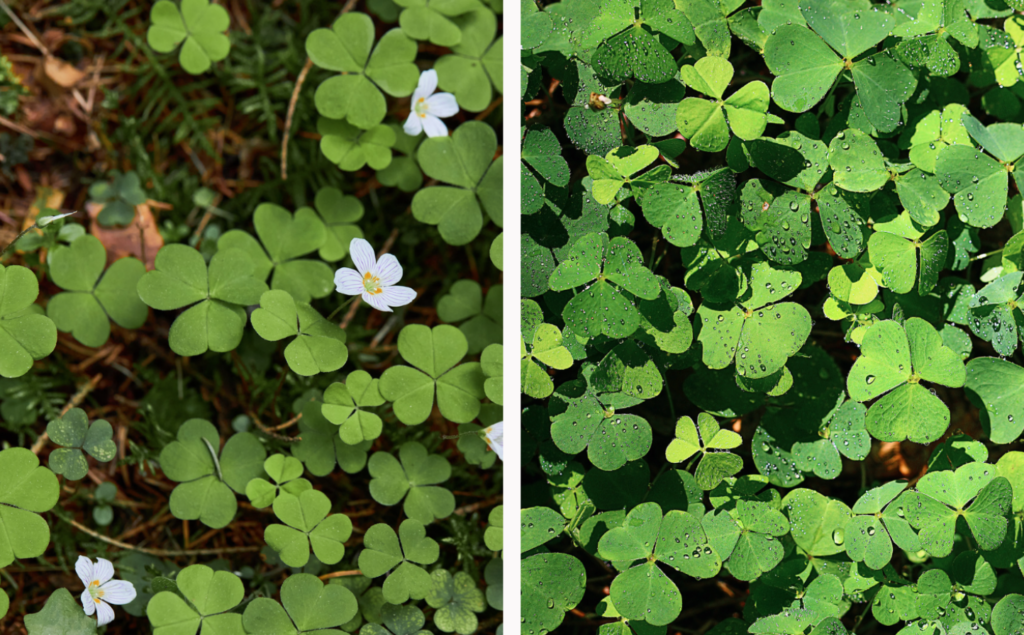
2. Ground Sorrel (Oxalis spp.)
Ground sorrel is easy to mistake for clover, with its delicate, three-part leaves and small flowers. There are several species of Oxalis, including native species that can be found growing naturally throughout the Southeast. Their small flowers provide resources for pollinators, while their low-growing habit helps cover soil rather than leaving it exposed.
And, as with so many plants we call weeds, they’re often perfectly capable of living alongside the plants we intentionally put in the ground.
Why we leave it: It provides groundcover, supports pollinators, and contributes to plant diversity.
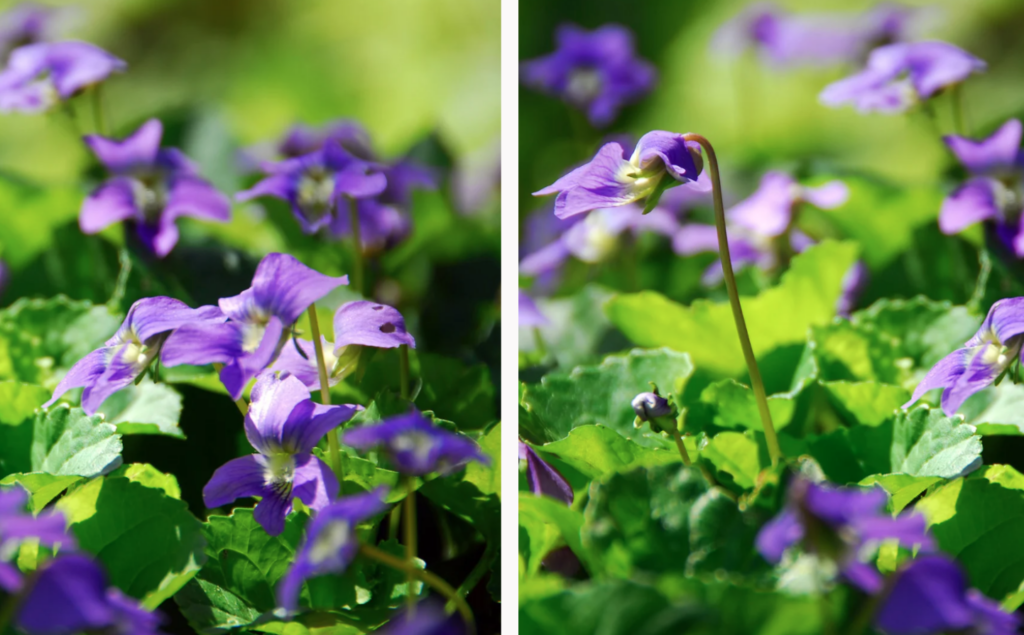
3. Violets (Viola spp.)
Violets are easy to overlook. They form low-growing carpets and can thrive in conditions where other plants struggle. Their gorgeous flowers provide an early source of nectar for pollinators, and their leaves are an important food source for the caterpillars of several butterfly species. Their seeds are also eaten by birds and other wildlife.
Plus, they’re beautiful. When violets volunteer in a lawn or under trees, we often consider them a welcome addition rather than something to eradicate.
Why we leave it: We love an early source for nectar before the other flowers start to bloom. Plus they provide beautiful low-growing groundcover.
4. Carolina Geranium (Geranium carolinianum)
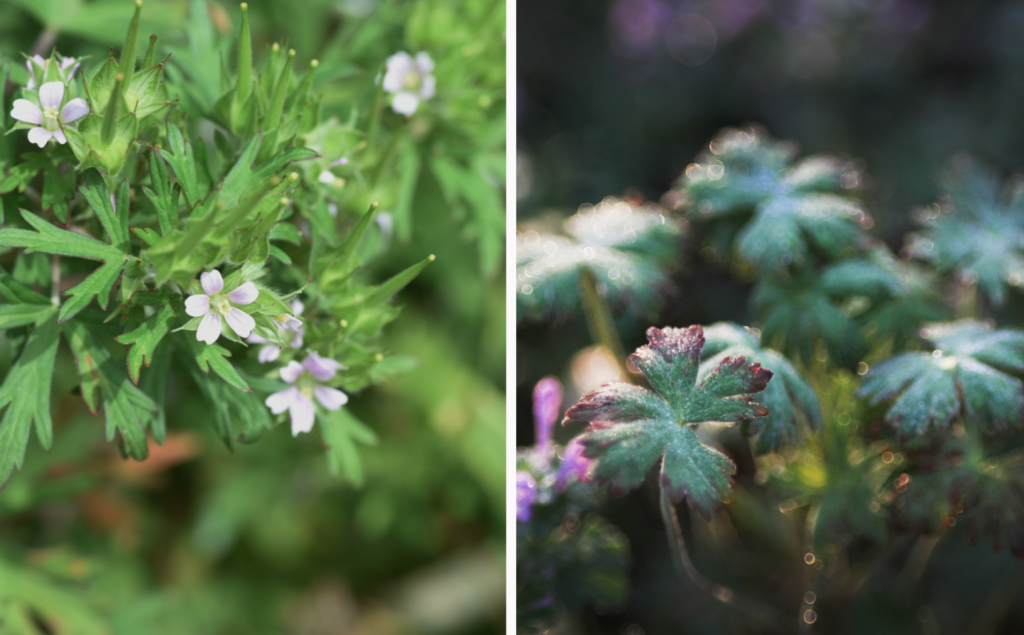
Carolina geranium is a native annual or biennial that often shows up in disturbed soil, garden beds, and lawns. It has delicate pinkish flowers and deeply lobed leaves, and it can be especially useful as a temporary plant in places where the soil has been disturbed.
This is one of the things we love about so-called weeds: they often arrive when the landscape needs them. A disturbed patch of soil doesn’t stay bare for long. Plants like Carolina geranium move in, covering the ground and participating in the process of succession.
We don’t always need to rush in and decide what should replace them.
Why we leave it: It provides habitat and food for insects while helping cover and occupy disturbed soil.
5. Dichondra (Dichondra spp.)
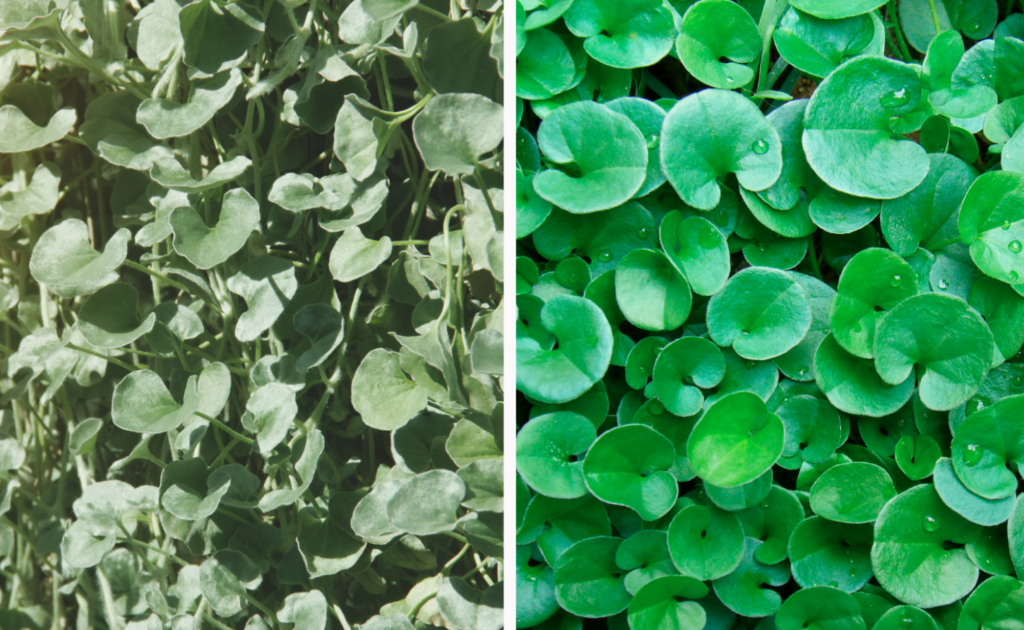
If you have ever seen little round leaves spreading through your lawn, you may have encountered dichondra.
This low-growing plant can form a dense carpet and is particularly well suited to areas where you don’t necessarily need a traditional turfgrass lawn. Its small, inconspicuous flowers provide resources for pollinators, while its sprawling growth habit helps keep soil covered.
We like plants that make us question what a lawn is supposed to look like. Does every inch need to be the same grass? Or could a lawn be a community of plants that are adapted to the conditions of the site?
Why we leave it: It creates low-growing living cover, contributes to lawn diversity, and can thrive without needing to be treated as a problem.
6. Cinquefoil (Potentilla spp.)
Cinquefoil is another low-growing volunteer that we’re often happy to leave in the right place.
There are many species of Potentilla, including native species, and their small flowers are valuable to bees and other pollinators. Their foliage creates cover close to the ground, and many species are well adapted to tough conditions.

The Question We Want to Ask Instead
There is a tendency in gardening to look at a landscape and immediately start making a list:
This needs to go.
That needs to be cut back.
That needs fertilizer.
That needs more mulch.
We’re interested in a different first step. What if we observed? What if we spent a little more time watching before deciding what needs to change?
A plant growing where we didn’t put it isn’t necessarily a failure. It might be responding to something happening in the soil. It might be creating habitat. It might be holding the ground together. And sometimes, it might actually be a problem.
That’s the point.
Observation gives us the information we need to tell the difference.
Permaculture isn’t about never intervening. It’s about making thoughtful interventions based on relationships and patterns rather than automatically trying to control everything. So the next time you see a “weed” in your garden, pause before you pull it. Look a little closer and ask yourself: What if this plant isn’t a problem to solve? It might just be part of the garden.