



Spring in the Southeast brings a familiar rhythm: bursts of sunshine followed by long, soaking rains. While those showers are essential for waking up the landscape, the drought and flood pattern can reveal poor draining soils quickly.
If you’ve ever noticed pooling water, soggy lawn patches, or erosion after a storm, your landscape is asking for a better way to handle water. One of the most beautiful and effective solutions? A dry creek bed.
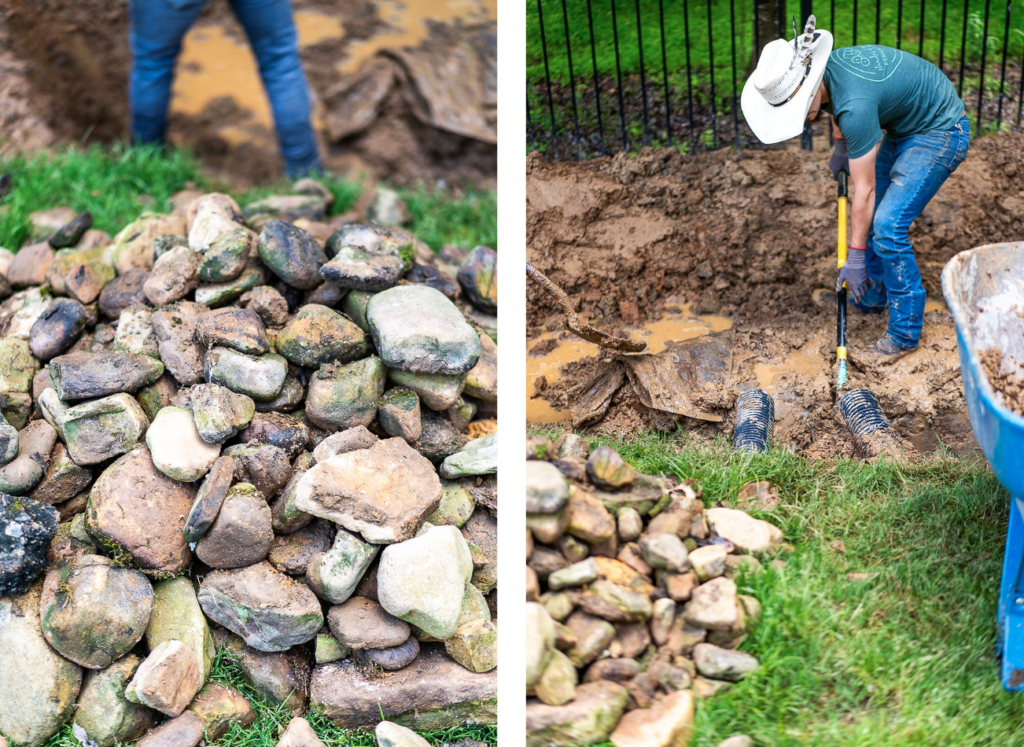
What Is a Dry Creek Bed?
A dry creek bed is a shallow, stone-lined channel designed to mimic the natural flow of water across the land. Most of the time, it sits dry (hence the name), but during heavy rain, it comes to life—guiding water safely through your landscape instead of letting it collect where it shouldn’t. Think of it as functional beauty: part drainage solution, part design feature.
Why Spring Showers Call for Smarter Water Management
In regions like ours, spring rainfall often comes in intense bursts rather than gentle, steady drizzles. That means water hits the ground faster than the soil can absorb it.
Without a plan, that water:
- Pools in low spots
- Washes away soil and mulch
- Stresses plant roots
- Creates muddy, unusable areas
A dry creek bed works with gravity and natural flow patterns to redirect that water, reducing damage while supporting a healthier landscape.
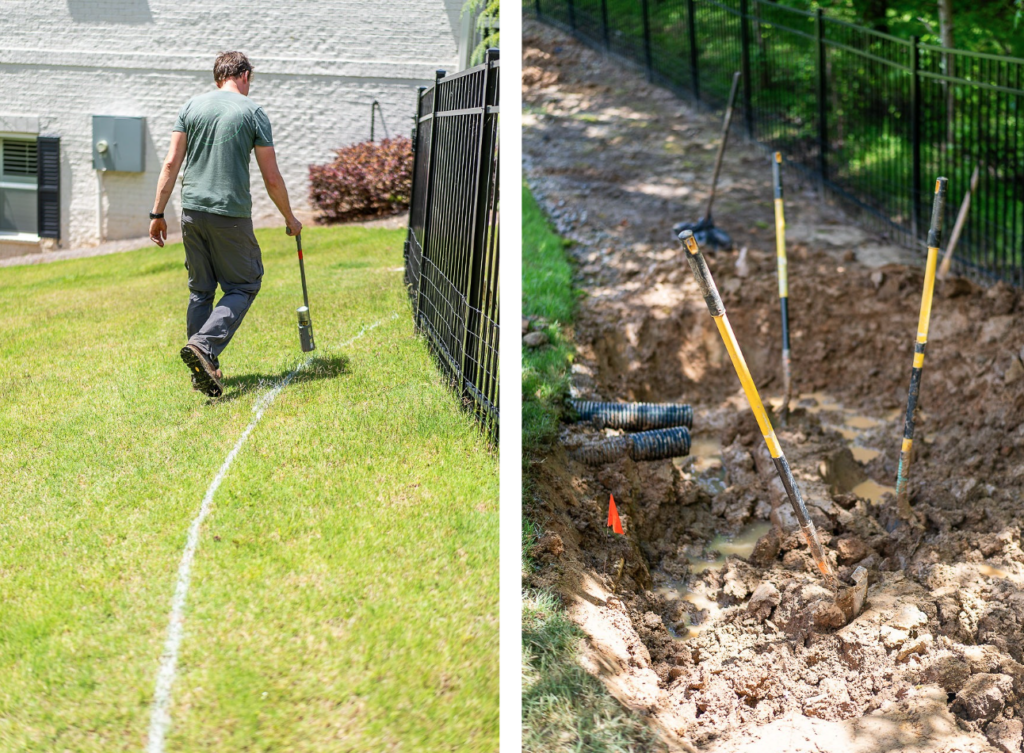
The Benefits of a Dry Creek Bed
1. Prevents Erosion
Instead of water carving its own unpredictable path, a dry creek bed gives it a designated route. This protects your soil, plantings, and hardscapes from being washed away.
2. Improves Drainage
By moving water away from problem areas—like your home’s foundation or lawn depressions—you create a more balanced and functional outdoor space.
3. Supports the Water Cycle
Dry creek beds slow water down, allowing more of it to soak into the soil rather than rushing off into storm drains. This helps recharge groundwater and supports long-term soil health.
4. Adds Natural Beauty
Done well, a dry creek bed looks like it’s always been there. With thoughtfully placed stone, curves that mimic nature, and integrated plantings, it becomes a focal point—not just a fix.
5. Creates Habitat Opportunities
Incorporating native plants along the edges can turn your dry creek bed into a corridor for pollinators and beneficial insects.
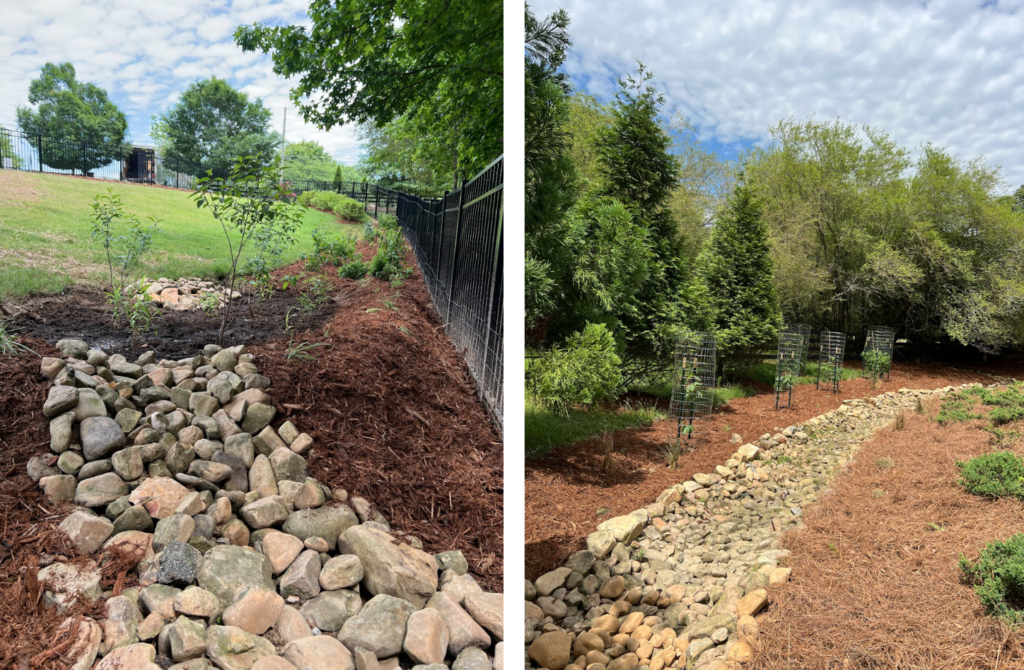
Designing a Dry Creek Bed That Works
A successful dry creek bed isn’t just about placing rocks—it’s about understanding how water already moves through your landscape.
Here are a few key principles:
- Follow the natural flow: Work with existing slopes and low points rather than fighting them.
- Use varied stone sizes: Combine larger anchor stones with smaller gravel to create stability and a natural look.
- Add gentle curves: Straight lines feel artificial; curves slow water and mimic real streams.
- Layer in plants: Grasses, perennials, and deep-rooted natives help stabilize the edges and soften the look.
- Plan for overflow: Always consider where the water goes next—a rain garden, swale, or another absorption area.
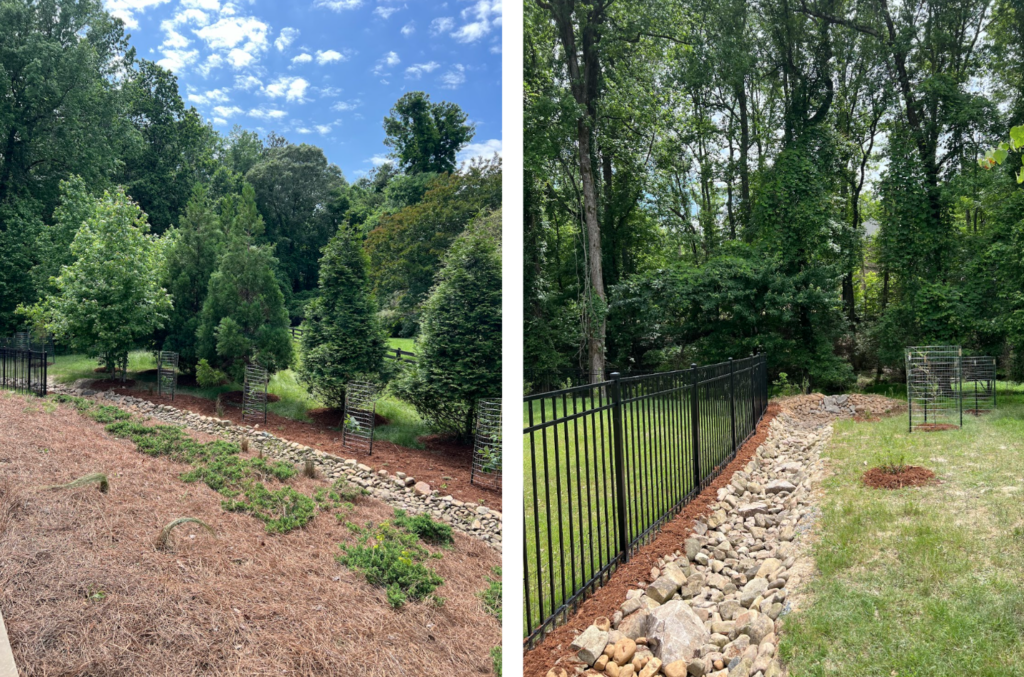
A Regenerative Approach to Drainage
At its best, a dry creek bed does more than solve a problem—it becomes part of a larger system.
Instead of treating water as something to get rid of, we start to see it as a resource to be slowed, spread, and sunk back into the land. Pairing a dry creek bed with features like rain gardens or permeable planting zones can transform your yard into a resilient, water-wise ecosystem.
With a little intention, even the heaviest spring rains can become an asset—feeding your landscape instead of fighting it. And if you’re ready to turn spring showers into something your landscape can truly benefit from, we’re here to help you design the way forward. Book a call.