



What if the rain falling on your property could become one of the greatest assets in your landscape? Instead of rushing stormwater away through gutters, drains, and downspouts, a rain garden gives that water somewhere to go.
A rain garden is a planted depression designed to temporarily capture and slow stormwater runoff, allowing it to sink into the soil rather than flowing rapidly across the landscape. But at Shades of Green, we think of rain gardens as more than drainage solutions. They’re small, beautiful examples of how we can work with natural systems instead of against them. A well-designed rain garden can slow water, reduce erosion, support pollinators, recharge groundwater, and create habitat—all while turning a place that might otherwise be a muddy or problematic part of the yard into a thriving ecosystem.
So what exactly makes a rain garden work?
The Water Source
Every rain garden begins with water. That might be runoff from a roof, driveway, patio, sidewalk, or another impervious surface. During a storm, these surfaces prevent water from soaking into the ground, causing it to move quickly across the landscape. The first step is understanding where that water is coming from and where it wants to go. Instead of treating runoff as something to get rid of, we can ask: How can we slow, spread and sink the water? That shift in perspective is at the heart of regenerative water management.
The Inlet
The inlet is where water enters the rain garden. This might be the end of a downspout, a swale, a gently sloping channel, or another designed pathway that directs water into the basin. The goal isn’t to send water rushing into the garden, it’s to deliver water gently. Depending on the site, rocks, gravel, plants, or other materials can help slow the velocity of incoming water and prevent erosion. A well-designed inlet works with gravity while keeping the force of the water under control.
For a deeper look at how we decide which water-management technique makes sense for a particular site, see our guide to managing water wisely.

The Basin
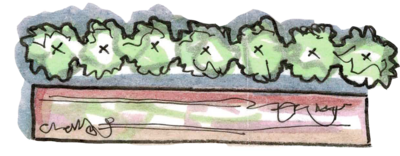
This is the part most people picture when they hear “rain garden.” A rain garden is typically a shallow depression that temporarily holds stormwater after a rainfall event. And temporary is an important word. A rain garden isn’t supposed to become a permanent pond. Water should infiltrate into the surrounding soil within a reasonable period of time, depending on the site’s conditions and design.
The basin gives water something that our increasingly paved landscapes often don’t: time. Time, of course, for the water to slow, spread and then sink.
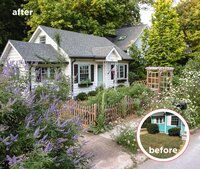
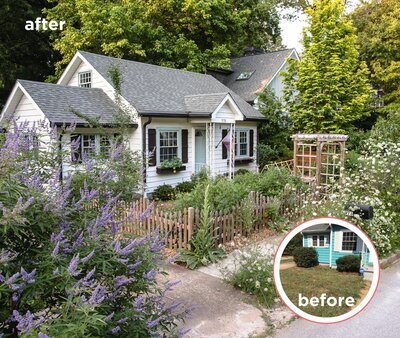
Our Decatur rain garden project is a great example of how multiple rain gardens can be used together to capture runoff, protect a home, and restore the functionality of a landscape.

The Soil
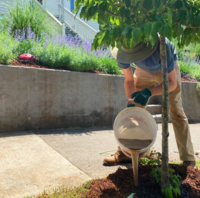
The plants may be what we notice first, but the soil is doing much of the heavy lifting. Engineered soil is incredibly good at receiving and storing water—we choose wisely when layering the soil in a rain garden. Organic matter improves soil structure and helps create spaces where water and air can move. Gravel can often provide highly permeable material. Roots create channels through the soil. Soil organisms contribute to a living underground network that supports both plants and water infiltration.
This is why rain gardens aren’t simply holes in the ground filled with plants. The soil itself is part of the system. Before installing a rain garden, it’s important to understand the existing soil, drainage, slope, and infiltration conditions. Not every site will be appropriate for the same design.
Healthy soil is foundational to effective water management, which is why we often talk about building soil as part of regenerative landscape design.

The Plants
The best plants for a rain garden are selected based on the conditions they’ll actually experience: periods of wetness followed by periods of dryness, sun exposure, soil type, and the amount of water moving through the site. Native and regionally appropriate plants are often the best choices because they can provide habitat and support local ecological relationships while adapting to local conditions.
A rain garden can include plants with different heights, root structures, bloom times, and ecological functions. Some plants help hold soil in place. Some provide nectar and pollen. Some create habitat close to the ground. Some send deep roots into the soil.
Together, they create a living water-management system.
The Overflow
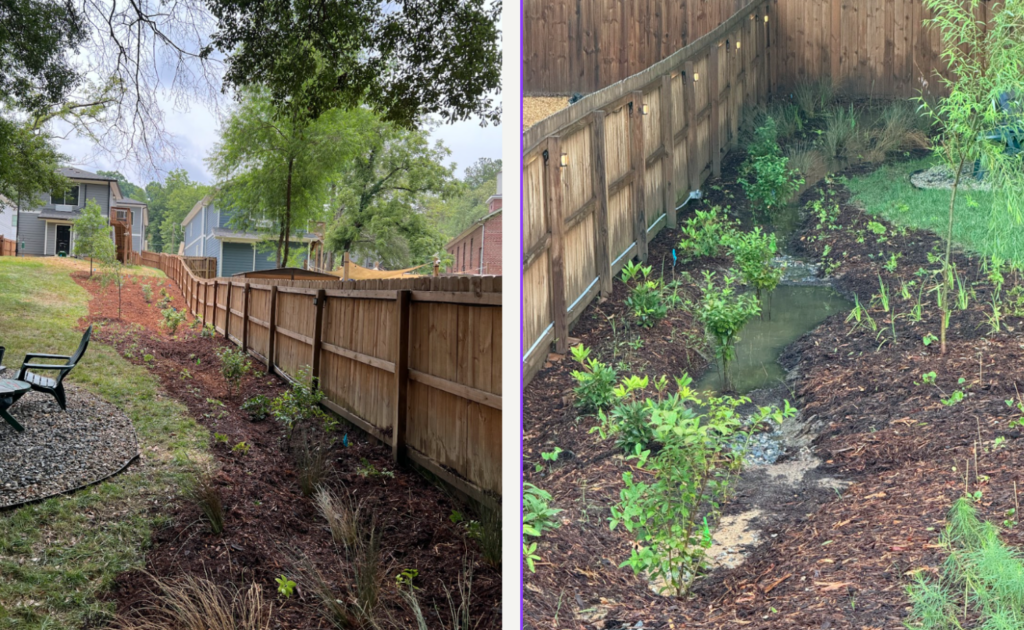
Even the best rain garden has a limit. During particularly large storms, the garden may receive more water than it was designed to hold. That’s why a thoughtfully designed rain garden includes a safe overflow pathway. The goal is to make sure excess water has somewhere intentional to go—rather than allowing it to carve an unintended channel through your garden or toward your foundation.
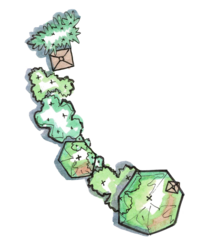
Often when completely full the rain garden will overflow to a designated area on the landscape that is further away and lower in elevation. Sometimes that could be a second rain garden, to an existing stormwater drain, or some other landscape feature that can tolerate that overflow.
Planning for overflow is an important part of any water-management system. Water doesn’t stop moving simply because we’ve given it a place to collect temporarily—we need to think about where it goes next.

What a Rain Garden Does for the Larger Landscape
A rain garden may occupy a relatively small footprint, but its effects can extend far beyond its edges. When we slow stormwater down, we can reduce erosion and the amount of sediment and pollutants being carried into streams. When we allow water to infiltrate where it falls, we help return water to the soil rather than immediately sending it downstream. When we plant the garden with diverse species, we create food and habitat for insects, birds, and other wildlife.
And when we build healthy soil, we’re not just managing water—we’re building a more resilient landscape.
This is the beauty of regenerative design: One thoughtful intervention can perform many functions at once. Contouring the landscape is another example of this approach, using the natural patterns of the land to slow water, encourage infiltration, reduce erosion, and support soil fertility.
A rain garden isn’t just a place for water to go. It’s an opportunity to restore a relationship between water, soil, plants, wildlife, and people. When we stop asking, “How do I get this water away?” and start asking, “How can this water support the life of this landscape?” we begin designing very differently.